


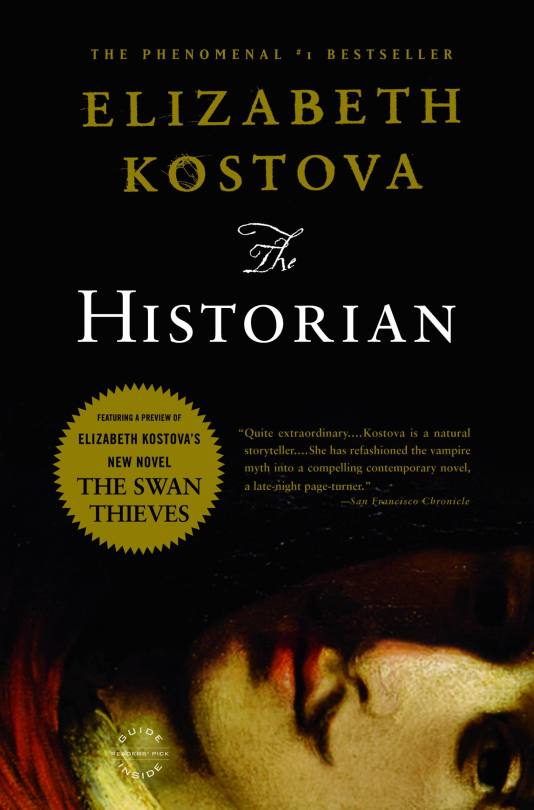
Rating: 2 / 5
Review: A contemporary gothic adventure novel that was on the NY Times Best Seller List with 900+ pages and a bunch of awards?? This shit has got to be good, right? Apparently not so. I didn't go into this expecting a masterpiece by any means. I wanted something reasonably exciting with vampires and action and suspense and a dark, fun atmosphere. I received very little of the above. I mean - when you look into the book it seems like it has a decent amount of passionate fans from Goodreads reviews to YouTube videos so this could just be a personal issue. For whatever reason The Historian and I did not mesh well.
The book is told primarily in a series of letters between the characters or in flashback sequences as a father, Paul, recounts his adventures as a college student after receiving a mysterious book with a woodcut of a dragon in the center, to his daughter. He soon learns his thesis advisor, Professor Rossi, is also in possession of one of these books, at which point the Professor goes missing. The rest of the book is primarily about his search to locate and save his mentor while traveling around Europe and Eurasia with Professor Rossi's long lost daughter whom he meets primarily by "coincidence". This was the book of coincidences. I'd say 90% of the plot moved forward because they just happened to meet so and so on the street or in a shop or in a restaurant and realized "OH WOW! You're involved in the Dracula mystery too! That's wild - lets all work together!!" The weirdest part is that Kostova seems to realize she is doing this and attempts to rectify it by having the characters comment on how strange of a coincidence it is. I thought for a while that she was setting us up for some amazing twist that would explain it all away. But no.
The letter format sounded unnatural and wholly not like a letter, while at the same time limiting the way the narrative was able to be told. I didn't see a benefit and I would have enjoyed the story more without it and maybe a letter included once in a while. The descriptions of the locations were beautiful which is the one positive thing I can say. It certainly makes you want to travel - but it seemed so bizarre how someone could be responsible for such lovely descriptive language while simultaneously creating such a dragging plot and dull characters.
Don't expect much action or vampires - I think altogether we come across 2 or 3, with Dracula included. At no point did they seem to be a genuine threat to the characters and I never found their appearances anything but frustrating because of how brief they were. Dracula in particular, who is introduced at the climax about 600+ pages in, is a huge let down and not given nearly enough time considering how long we spent searching for his lair.
Final Thoughts: Overall a meandering, unorganized, mediocre novel. Like I said - I realize there are people out there who really enjoyed it so I wish I could pinpoint the crowd that might get something from it but I'm really not sure? In general I would not recommend it, especially considering the ridiculous length. I'd love to read something with a similar atmosphere and plot that was more compelling.






.jpg)
 The story follows a "cyber cowboy", Henry Case, a hacker who was recently laid off and has damaged his central nervous system making it impossible for him to re-enter the "matrix". He is contacted by another company and offered the option to have this damage fixed and paid for given that he agrees to work with them on a project. Henry eagerly agrees, wanting nothing more than to return to his fast-paced lifestyle within cyberspace. The story continues to follow Case as he works with his mysterious benefactors, along with his partner Molly Millions. I was grateful to Gibson for allowing Molly to unapologetically take on the physical, "kick-ass" role while Henry primarily remained safe at his virtual station. Too many stories (lets even think modern day television: Arrow, The Flash) feature the amazing male hero out in the field and the nerdy, brilliant female counterpart relaying information from a desk. To see someone immediately flip that dynamic before it became such a cliché was a wholly pleasant experience. No complaints a la

 There are a decent amount of PoC in the cast (including our lead!) as well as a trans character which was really exciting. The story itself isn't as tight as